Metallic epoxy floor in Edina
A metallic epoxy floor uses pearl or metallic pigments stirred into clear resin, then moved around by hand so the surface looks like marble, smoke or liquid stone. Published prices run about $5 to $12 per square foot, according to a home-renovation magazine (March 2026).[1] It is a design floor, not a garage default.
Calls will be recorded.
Last updated
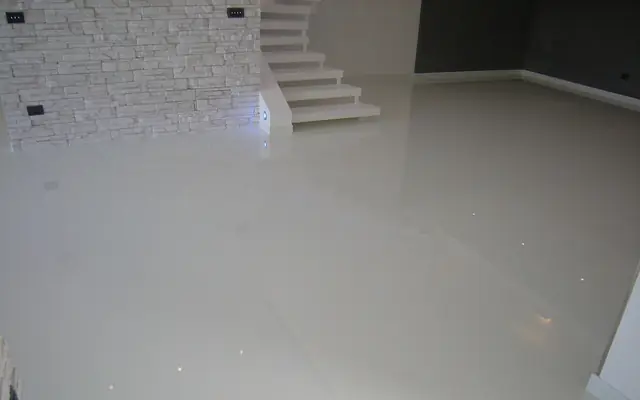

How the marble effect is made
Nothing about the look is printed or stamped. The installer pours tinted epoxy over a prepared base color, then works pigment through it with rollers, brushes, a torch or a spray of solvent. Each pass changes how the pigment settles, so no two floors match.
The base matters as much as the pigment. A black base gives deep, wet-looking swirls. A white base gives a soft, pearly look. The pigment is a mica or metal powder suspended in the resin system, which is a resin plus a curing agent mixed on site.[2]
The epoxy marble look comes from this movement. Slow, wide passes make veins. Tight, quick passes make cloud-like patches. Ask to see a sample board made on the same base color you are considering.
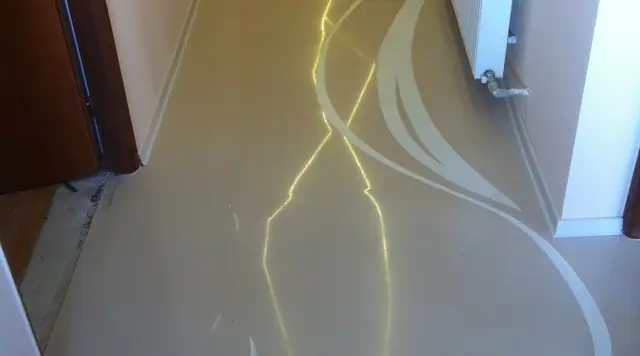

The white epoxy floor question
A white epoxy floor is a striking look, and one of the least forgiving. White shows tire marks, dirt and yellowing more readily than darker tones. It also shows any ripple or tool mark in the slab.
Metallic white and pearl blends are a better bet than a flat white because the shimmer hides specks. If you want a bright floor, ask about a UV-stable topcoat. Standard epoxy can yellow in sunlight, while polyaspartic topcoats are UV stable and suit floors that see sun.[3] See the polyaspartic page for the tradeoffs.
Where metallic epoxy makes sense
Metallic epoxy is a finish choice, so it belongs where people see the floor.
- Finished basements and rec rooms. Interior floors with steady temperature, as long as moisture is tested first.[4]
- Entry halls, kitchens and sunrooms with a slab floor.
- Showroom-style garages for a car lover who wants a statement.
- Home offices and studios built on a slab.
Three Minnesota facts bear on where one of these floors goes. A basement rec room is a common spot, and the Minnesota Department of Health recommends that every Minnesota home be tested for radon,[5] which it finds at elevated levels in about 40% of homes;[6] test before you spend on a design floor, because fixing air quality later can mean cutting into the slab. A showroom garage takes road salt on every winter's tires, and MnDOT's salt use swung from 141,489 tons in 2024-25 to 190,758 tons in 2025-26.[7] And an unheated room is a cold-weather risk, since epoxy should not be applied below 50 degrees F and a colder slab slows curing.[3] Whether a design floor is worth it is a personal call, so compare the published ranges first.
What drives the cost
The $5 to $12 per square foot range is a published figure, not a quote, and it moves with design choices.[8] A national home-improvement site (April 2024) lists the same range as a materials add-on over a base epoxy price.
- Number of colors and effects. Three pigments with a torch pass take more labor than one color.
- Base condition. A smooth, well-ground slab needs less leveling material.
- Clear topcoats. A thicker, harder topcoat adds cost and wear resistance.
- Room size and shape. Many corners and short runs slow down the swirl work.
Labor is a large share of a garage epoxy job and can reach 65 percent of the price.[8] Metallic work is slower than a solid color, so it leans toward the high end. The pricing guide compares every system side by side.


Slab prep is not optional
A metallic floor is thin and glossy, so every flaw shows. Cracks, divots and old glue must be fixed before the base color goes on. Grinding also gives the coating a surface to grip. Read the concrete prep and crack repair page before approving any plan that skips it.
Moisture matters for the same reason. A bubble or blister under a glossy film is obvious. Manufacturer guidance says to test several areas of the slab, since that is the only valid way to tell if it is ready.[4]
Safety and cure
Cured epoxy is practically non-toxic unless it is cut, sanded or burned.[2] While it is wet, the mixed resin can irritate the eyes, nose, throat and skin, and can cause skin allergies or asthma in people who are overexposed.[2] Plan for ventilation and keep children and pets out during the work.
Foot traffic is possible after about 24 hours, with heavy use delayed for about a week.[3] Metallic work can cure more slowly in a cool room, so ask for the cure schedule in writing.
Related pages
If a lower-cost texture is enough, read about decorative epoxy flooring with flakes. If the room is a kitchen, the epoxy kitchen floor page explains the cleanability and cove questions that a showpiece finish still has to meet. If the floor is in a basement, see the basement floor coating page. The services overview lists every coating, and the contact page explains what happens to a call or request.
Sources
- This Old House. How Much Does Epoxy Flooring Cost?, March 13, 2026
- California Department of Public Health. Epoxy Resin Systems fact sheet (HESIS), 1989-06
- ConcreteNetwork.com. What's the Best Concrete Garage Floor Coating? Epoxy, polyurea, or polyaspartic, accessed November 23, 2026
- Sherwin-Williams. How Soon Can You Epoxy Coat Freshly Poured Green Concrete?, accessed November 23, 2026
- Minnesota Department of Health. Radon in Homes, accessed November 23, 2026
- Minnesota Department of Health. News release: radon testing during home real estate sales (page dated Jan. 13, 2025; listed in MDH's 2026 releases as Jan. 13, 2026), January 13, 2026
- Minnesota Department of Transportation. Winter Maintenance Report, accessed November 23, 2026
- Bob Vila. Epoxy Garage Floor Cost, April 26, 2024