Polyaspartic garage floor coating in Edina
Polyaspartic garage floor coating cures fast: the floor is usually usable in about a day, while epoxy takes a week or longer.[1] It is UV stable.[1] A national home-improvement site (January 2024) puts it at $4 to $9 per square foot.[2] The tradeoff is moisture: a damp slab can make it bubble and lift.
Calls will be recorded.
Last updated
What polyaspartic is
Polyaspartic is a type of polyurea, a fast-curing coating chemistry. It is usually applied as a thin, clear or tinted layer over a base coat, or as a full system in its own right. Installers use it because it is hard, glossy and quick to cure.
It differs from epoxy in two practical ways: it cures much faster, and it holds its color in sunlight. One source says plain polyureas can discolor in sun, so the polyaspartic version is the one sold for garage floors that get light through the door or windows.[1] Whichever system you consider, ask the installer to explain why it suits your slab.
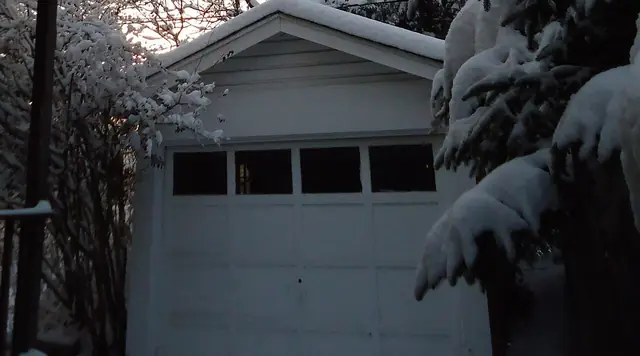
Cold-climate cure speed for one-day coatings
Cure speed matters more in a cold state. In Minnesota, the cold months leave a shorter window for a garage job, and the 2025-26 winter brought an average of 19.8 winter events across the state.[3] A system that lets people use the floor again within about a day fits that window better than one that holds the car out for a week.[1]
Temperature still sets limits. The Twin Cities normal January temperature is 16.2 F, and the 1991-2020 monthly normals stay under 35 F from November through March.[4] Ask the installer for the product's published minimum application temperature, and how the slab will be warmed. Epoxy should not be applied below 50 degrees F.[1] Product data sheets differ for polyaspartic systems, so do not assume a number.
How polyurea systems compare with other resins
Polyurea is the wider family, and polyaspartic is one member. A home-renovation magazine calls polyurea resistant to UV radiation and a great choice for outdoor applications.[5] A concrete trade site says plain polyureas can discolor in sun, which is why the polyaspartic version is sold for garages with windows.[1] The two views differ, so ask the installer which resin is in the topcoat and for its stated UV performance.
Epoxy suits a base coat that needs bond and body. Polyurea and polyaspartic suit a fast topcoat or a short closure window, since they return a floor to use within about a day.[1] For a slab that sees salt every winter, such as an Edina garage, the topcoat also has to shrug off the chemical deicers that make freeze-thaw damage worse.[6] MnDOT used 141,489 tons of salt in winter 2024-25 and 190,758 tons in 2025-26, so road-salt exposure in Minnesota swings widely from one winter to the next.[3]
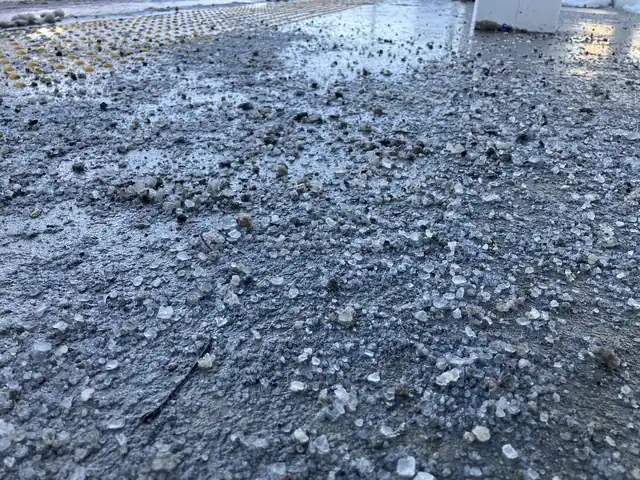

Where polyaspartic can fail
The weak point is moisture. Polyaspartics cannot be installed on a floor with a high moisture vapor emission rate, because trapped moisture can bubble the coating and lift it away.[1] That is a serious issue in Edina, where 68% of homes were built before 1980,[7] so many slabs may lack a vapor barrier below them.
Manufacturer guidance says moisture should be tested in several areas. It names three tests: in-situ relative humidity probes (ASTM F2170), calcium chloride (ASTM F1869) and a plastic sheet test (ASTM D4263).[8] Ask which one the installer uses, and ask to see the numbers.
If a moisture barrier is needed, it could add about $1 per square foot, according to a national home-improvement site.[2]
Speed means less time to fix mistakes
Fast cure helps you, but it makes the application unforgiving. An installer has a short working window to roll out, broadcast chips and level the film. A crew that mixes small batches and works in rhythm gets a good result. A rushed job can leave lap marks.
This is why prep matters even more. Cracks and spalls need to be repaired and the slab must be ground before coating. The concrete preparation page covers what proper prep looks like.
Have a question about a fast-cure coating?
Calls will be recorded.

Cost range
A national home-improvement site (January 2024) reports polyaspartic floor coating at $4 to $9 per square foot, or $1,440 to $3,240 for an average garage. It puts 500 square feet at $2,000 to $4,500.[2] That is a national range. Many local prices run higher or lower depending on prep, size and system.
Typical price movers include:
- Prep work. Large cracks, deep chips and uneven floors must be repaired first, and that adds labor.[2]
- Number of coats. A full polyaspartic system with a base coat, flakes and a clear coat costs more than a single clear layer over an existing floor.
- Slab moisture. A needed barrier adds cost and time.
- Garage size. Larger areas raise the total.
The pricing guide places polyaspartic next to epoxy so you can compare them.
Polyaspartic or epoxy, how to decide
There is no single winner. Polyaspartic wins on speed and sun resistance. Epoxy has its own moisture limits, since trapped moisture is a problem under it too,[9] but it is often the lower-priced system.
Some installers combine them: an epoxy base for bond and body, and a polyaspartic topcoat for scratch and UV resistance. That is a good question to ask: what goes down in each layer and why?
If you want a decorative look, ask how the system works with chip flakes. For the basics of a standard job, read about garage floor coating.
What to ask the installer
- Which moisture test did you run, and what were the results?
- What is the lowest slab temperature you will coat at?
- What are the coats, the thickness and the cure times in writing?
- How will you handle a sudden weather change mid-job?
Because polyaspartic topcoats resist sunlight, they come up often for outdoor patio and porch coatings. Their short downtime also suits a warehouse floor coating that cannot stay closed for a week.
Choosing the person who does the work is as important as choosing the product. The common questions page lists what to check, and the services overview covers other coatings.
Sources
- ConcreteNetwork.com. What's the Best Concrete Garage Floor Coating? Epoxy, polyurea, or polyaspartic, accessed November 23, 2026
- Bob Vila. Polyaspartic Floor Coating Cost, January 31, 2024
- Minnesota Department of Transportation. Winter Maintenance Report, accessed November 23, 2026
- Minnesota Department of Natural Resources State Climatology Office. Twin Cities normals: 1991-2020 compared to 1981-2010, May 6, 2021
- This Old House. How Much Does Epoxy Flooring Cost?, accessed November 23, 2026
- Federal Highway Administration. Chemical Deicers and Concrete Pavement: Impacts and Mitigation (Tech Brief FHWA-HIF-17-008), 2018-03
- U.S. Census Bureau (ACS 2024 5-year, via Census Reporter). American Community Survey 2020-2024 5-year estimates for Edina city, MN (served by Census Reporter API), accessed November 23, 2026
- Sherwin-Williams. How Soon Can You Epoxy Coat Freshly Poured Green Concrete?, accessed November 23, 2026
- Synchrony. How Much Does Epoxy Flooring Cost?, April 20, 2026