Outdoor epoxy floor for patios in Edina, MN
An outdoor epoxy floor is a hard coating on a patio, porch or walkway. It is harder to get right than the same coating in a garage. Sun, rain and freezing weather all attack it. A national cost guide's 2026 figures put an installed epoxy patio at $800 to $4,000.[1]
Calls will be recorded.
Last updated

Why outdoors is a different job
A garage keeps the sun and most of the rain off a coating. A patio gets both, every day. Two problems matter most for an outdoor epoxy floor: ultraviolet light and trapped water.
On sun, an epoxy resin maker's paper says it has long been widely accepted that amine-cured bisphenol A epoxy coatings perform poorly in exterior or UV-exposed applications.[2] A home-renovation magazine says epoxy can take on a yellowish color with sunlight and humidity, and that a UV-resistant topcoat prevents it at added cost.[3] That is why a UV-stable top layer comes up so often for outdoor jobs.
Epoxy, polyurea or polyaspartic outside
The usual answer is a UV-stable top layer. A home-renovation magazine calls polyurea resistant to UV radiation and a great choice for outdoor applications.[3] A concrete trade site says polyaspartics are UV stable and suit sunny garage floors, while plain polyureas can discolor.[4] The two sources differ on plain polyurea, so treat polyaspartic as the safer named choice and ask for the topcoat's stated UV performance in writing.
A typical outdoor build has three parts:
- Prepared concrete. The slab is ground or shot-blasted so the coating can grip. The concrete preparation page covers how.
- A bonding or base layer. This can be epoxy, which bonds well and fills small pits.
- A UV-stable topcoat. This layer takes the sun, so it is the part to ask about first. The polyaspartic coating page explains that chemistry.
If an installer proposes plain epoxy with no UV-stable topcoat on a sunny patio, ask why. Yellowing is the risk the sources describe.

Freeze-thaw, snow and standing water
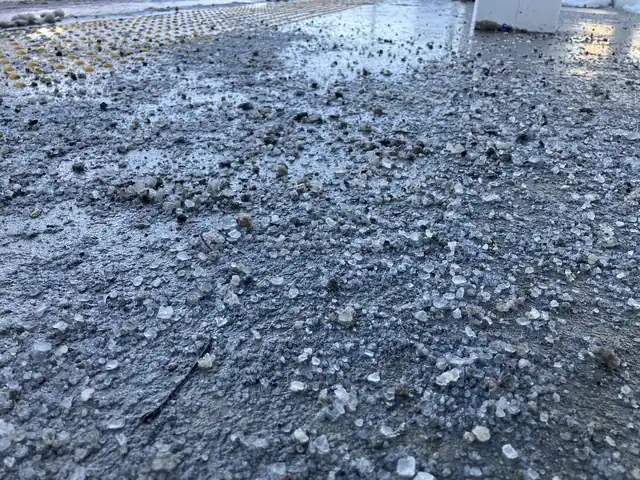
The Twin Cities see 51.2 inches of snow a year on average,[5] and the monthly normal temperature sits below freezing in December, January and February.[5] Water that gets into concrete and freezes can break the surface, and any coating on top has to survive that movement.
A national cost guide notes that unsealed concrete quickly absorbs moisture, and water freezing inside it causes more cracks.[6] Two cautions follow:
- A patio that slopes toward the house or holds puddles is a poor candidate. Fix the drainage first.
- A coating that blocks vapor from below can blister if the slab is wet. Moisture testing matters outdoors too, as the basement coating page explains for below-grade slabs.
Epoxy should not be applied below 50 degrees F,[4] so winter is generally out for the job.
Slip risk on a wet patio
A smooth, glossy coating is slick when wet. A home-renovation magazine notes that an epoxy floor can become dangerously slippery if soap or oil-based products get spilled, and that anti-slip additive costs extra.[3] On a patio, rain does the same job as a spill. Ask for a textured finish, and read the anti-slip coating page before you choose a sheen.
What a patio coating costs
One national source's table, dated February 3, 2026, gives $800 to $4,000 installed for a patio of roughly 200 to 400 square feet.[1] That is a national figure, and an outdoor job in Minnesota may price higher if it needs a UV-stable topcoat and extra prep.
The cheaper alternative is sealing rather than coating. The same publisher's sealing guide puts sealing a 10-by-20-foot patio at $250 to $600.[6] A sealer will not change the look much and will not hide damage, but it can slow water entry. The sealing section of the concrete prep page compares the types, and the pricing guide shows how installed costs are published.
Edge cases: pavers, wood and old paint
Not every outdoor surface is a candidate.
- Pavers and flagstone. Joints move and fill with sand, so a rigid film tends to crack along them. Ask the installer how they treat joints.
- Wood decks. Wood expands and contracts with moisture in a way concrete does not. A coating made for concrete is the wrong tool.
- Old paint or sealer. Any film on the slab has to come off or be proven compatible. Otherwise the new coating can peel with it.
Edina's median home was built in 1971,[7] so older patios may carry patched cracks, past paint and hairline spalls. Each one needs a repair plan before a coating goes on.
Driveway coatings in Edina
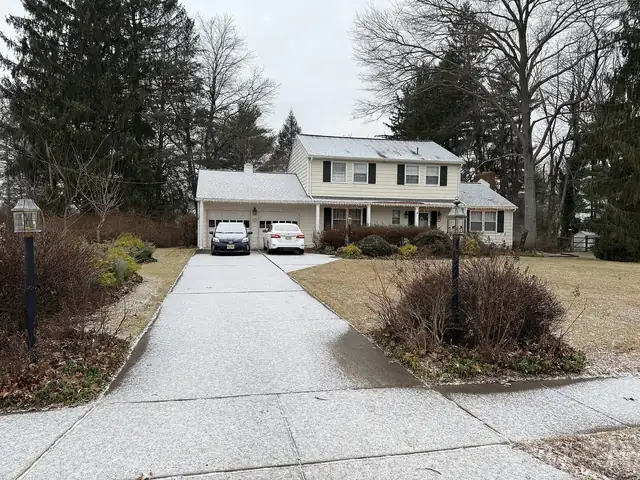
An epoxy driveway coating is a thin resin layer over a concrete driveway. One national source (February 2026) puts it at $1,200 to $5,800 for roughly 288 to 576 square feet, against $400 to $800 to seal.[1] In Minnesota, freeze-thaw and salt decide whether it lasts.
A coating is worth asking about when the surface is sound but ugly: oil stains, tire marks or a faded slab. It is a poor answer when the slab is scaling, heaving or cracking from movement, because a thin film follows whatever the concrete does underneath. In that case sealing, not coating, can be the honest answer.
MnDOT put 190,758 tons of salt on state roads in winter 2025-26,[8] and on concrete flatwork the most common deicer damage has been surface scaling.[9] A coating can hide scaling for a season, but it cannot stop the cause. Freeze-thaw durability depends largely on entrained air bubbles in the concrete mix.[9] So a driveway poured without enough air is more likely to scale under any finish.
Driveways sit in full sun, so ask for a UV-stable topcoat and check how it handles tire heat and plow edges. A glossy film on a sloped driveway is a real hazard when wet or iced, so ask for a textured finish. A national cost guide lists epoxy as taking up to a week to cure and polyaspartic at one to two days.[10] That matters on a driveway you use daily.
Timing is tight. A national cost guide says the best time to seal is spring or fall when temperatures stay between 50 and 80 degrees F for at least 24 hours.[6] Epoxy should not go on below 50 degrees F.[4] Prep is the same story as any coating, so see the prep and crack repair page and its sealing section for the cheaper alternative.
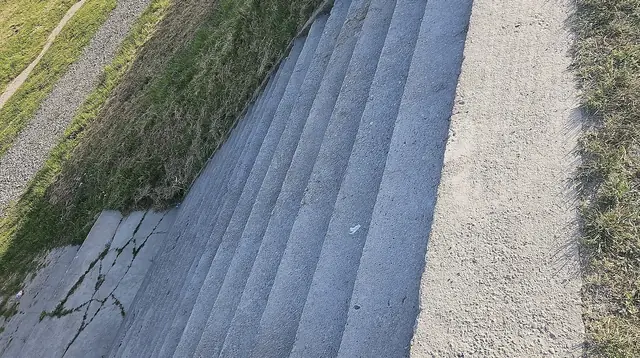
Epoxy stairs and steps in Edina
Epoxy stairs are concrete steps, basement stairs or garage entry steps coated with resin and a gritty topcoat. The coating adds wear resistance and color, but the edge is the hard part. Minnesota's residential code is the 2018 International Residential Code with state amendments,[11] and Minnesota requires stairways to be at least 36 inches in clear width above the handrail height.[12] The code's stair section, R311.7, limits riser height and tread depth; a city handout summarizing it gives a maximum riser of 7 3/4 inches and a minimum tread of 10 inches.[13]
A plain gloss epoxy can become dangerously slippery when soap or oil-based products spill, according to a home-renovation magazine.[3] So a stair coating is a grip job first and a color job second. See the anti-slip coating section for how texture is tested.
Every layer adds thickness, and stairs have tight limits. The handout, which summarizes the Minnesota building code, says the greatest riser height within any flight shall not exceed the smallest by more than 3/8 inch, and the same for tread depth.[13] A thick coating on only some steps can upset that balance, so coat them all and measure before and after. OSHA's workplace rule is similar in spirit, requiring stairs to have uniform riser heights and tread depths between landings.[14]
A coating job does not change handrail rules, but it is a good time to check them. The handout calls for continuous handrails along stairs with four or more risers.[13] Exterior steps hold snow and ice. So ask what UV-stable topcoat they would get, and schedule the work in warm months because epoxy should not be applied below 50 degrees F.[4]
No source gives a stair-only price. Contractor-installed epoxy is published at $3 to $12 per square foot,[3] and small areas with a lot of edge work may price high. So ask whether a minimum charge applies. Foot traffic usually comes back about 24 hours after a garage epoxy job.[4] So ask how the work will be staged if the stairs are your only way in.
What to ask before you hire
- Which topcoat chemistry will face the sun, and what is its stated UV performance?
- How will the finish be textured for wet footing?
- How will cracks and control joints be handled so they do not reflect through?
- What moisture test was done, and what was the reading?
- What is the cure time before furniture and foot traffic, and what happens if it rains?
Where this fits with other work
A patio coating is a cousin of the garage floor coating job but with sun and rain added. If your concern is a salted driveway rather than a patio, see the driveway section above. For the full list, go to the services overview or the home page.
Sources
- HomeGuide. How Much Does Epoxy Flooring Cost? (2026), February 3, 2026
- American Coatings Association / Westlake Epoxy. Higher Solids, Lower Yellowing Epoxy System for Industrial DTM Coatings (CoatingsTech), accessed November 23, 2026
- This Old House. How Much Does Epoxy Flooring Cost?, accessed November 23, 2026
- ConcreteNetwork.com. What's the Best Concrete Garage Floor Coating? Epoxy, polyurea, or polyaspartic, accessed November 23, 2026
- Minnesota Department of Natural Resources State Climatology Office. Twin Cities normals: 1991-2020 compared to 1981-2010, May 6, 2021
- HomeGuide. How Much Do Concrete Cleaning and Sealing Services Cost? (2026), November 21, 2025
- U.S. Census Bureau (ACS 2024 5-year, via Census Reporter). American Community Survey 2020-2024 5-year estimates for Edina city, MN (served by Census Reporter API), accessed November 23, 2026
- Minnesota Department of Transportation. Winter Maintenance Report, accessed November 23, 2026
- Federal Highway Administration. Chemical Deicers and Concrete Pavement: Impacts and Mitigation (Tech Brief FHWA-HIF-17-008), 2018-03
- HomeGuide. How Much Does Concrete Coating Cost? (2026), November 25, 2024
- Minnesota Office of the Revisor of Statutes. 1309.0010 Adoption of International Residential Code, accessed November 23, 2026
- Minnesota Office of the Revisor of Statutes. 1309.0311 Section R311, Means of Egress, accessed November 23, 2026
- City of Wayzata, MN. Handrails, Guardrails and Stairways (Building Inspections handout, summarizing MN State Building Code R311 and R312), accessed November 23, 2026
- U.S. Occupational Safety and Health Administration. 29 CFR 1910.25 Stairways, accessed November 23, 2026