Preparing concrete for epoxy in Edina
Preparing concrete for epoxy is most of the job. The slab is ground, cracks are repaired, moisture is tested and dust is controlled before any resin is mixed. In 2020-2024 census estimates, about 68 percent of Edina's housing units were built before 1980,[1] so many slabs are old. Skip this and even a premium product peels.
Calls will be recorded.
Last updated
What prep does for the coating
Epoxy sticks by mechanical bond: it flows into the microscopic texture of the concrete and hardens there. Sealers, old paint, oil and a smooth troweled skin all block that bond. That is why installers grind first.
Labor, much of it prep, can reach 65 percent of a garage epoxy job's price.[2] That is the first thing to remember when a price looks low. A short prep step is the usual saving.
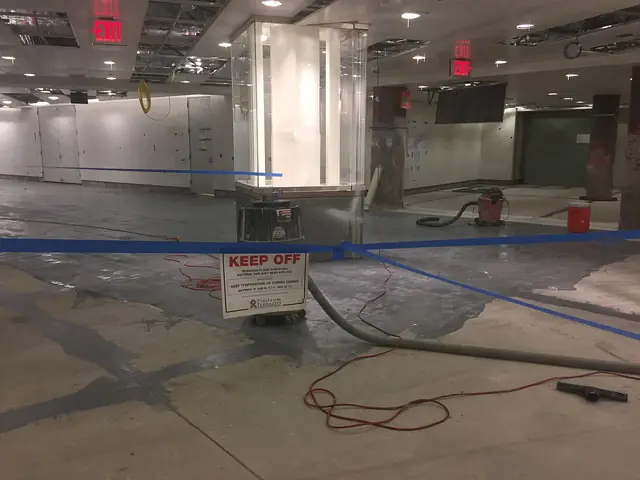

Grinding, not just etching
A diamond grinder with a vacuum shroud removes the weak surface layer and leaves a profile like fine sandpaper. Acid etching with a store-bought product is a lighter treatment and it leaves residue that must be rinsed and neutralized.
Professional floor prep by sandblasting is priced at $1 to $5 per square foot, according to a national home-improvement site (April 2024).[2] Shot blasting and grinding are other ways to profile the surface.
Shot blasting versus diamond grinding
Both methods open the surface so resin can grip. Grinding uses a vacuum-shrouded diamond wheel. Shot blasting throws steel shot at the slab and recovers it. One manufacturer asks for a surface profile of ICRI CSP 3-4, reached by suitable mechanical means.[3] Ask the installer which method will be used and what profile it will leave.
Stripping an old coating and profiling the slab
Old paint, film sealers and prior coatings must come off before new resin goes down. Removal and profiling often happen in the same pass, because the machine that strips the film also sets the texture. The installer should name the profile it is aiming for.
After removal: what happens to the bare slab
Once the old film is gone, the slab shows what it hid: cracks, stains and soft spots. The installer vacuums, repairs those defects and moisture-tests several areas before mixing resin.[4]
Surviving Minnesota freeze-thaw cycles: prep steps
A Minnesota slab goes through many freeze-thaw cycles, and prep has to reach concrete that can take more. FHWA, citing ACI, treats chemical deicer exposure as the most severe freeze-thaw condition for concrete.[5] Water that enters a weak top layer freezes, expands and lifts it, and a coating over that layer lifts with it.
So the goal of prep is sound, dry concrete. Grind past any scaled skin, fill the voids, and let the repair cure before color goes on. Ask the installer how deep the grinding goes on a slab that has seen decades of salt.
Silica dust is a real hazard
Grinding concrete releases respirable crystalline silica. OSHA sets a permissible exposure limit of 50 micrograms per cubic meter as an 8-hour average.[6] Its Table 1 for a handheld grinder indoors calls for a shroud and dust collector with at least 25 cubic feet per minute of airflow per inch of wheel diameter, a 99 percent filter with a cyclonic pre-separator or filter-cleaning mechanism, and a respirator only when the grinding runs more than four hours in a shift.[6] Walk-behind floor grinders list water-fed machines as a control option.[6]
For an Edina homeowner, the practical message is simple. Ask whether the grinder is connected to a dust collector. Ask how dust is kept out of the house and out of the HVAC system. A gritty cloud in the garage is a bad sign.
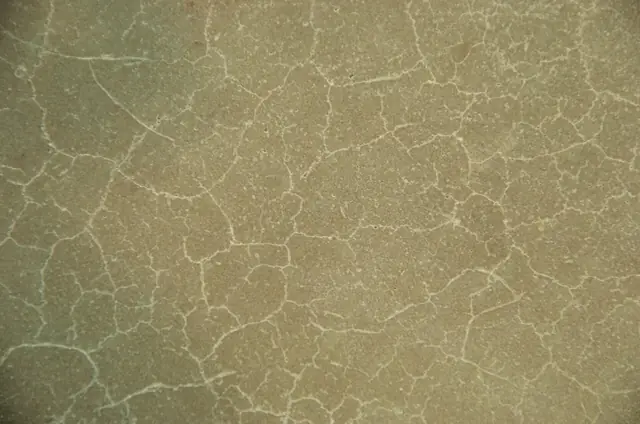

Repairing a concrete garage floor
Repairing a concrete garage floor before coating means dealing with each defect by type.
- Hairline cracks. Often filled with a low-viscosity epoxy or crack filler so they do not telegraph through the coat.
- Wider cracks and spalls. Cut out loose concrete, then patch with a repair mortar or a resin-based filler.
- Control joints. Cut by design. Many installers fill them with a flexible joint material and do not coat across them rigidly, because the slab will keep moving.
- Pitting and divots. Filled and ground flush so the coat is even.
- Old coatings and stains. Removed or ground off. Oil may need a degreaser first.
Federal highway guidance notes that surface scaling is the most common deicer damage on slabs.[5] Scaled concrete is weak at the top. If the surface flakes away under a scraper, grind deeper or replace the damaged area. A coating cannot hold a failing layer.
Moisture and cure testing
New concrete needs time. Standard specifications recommend at least a 28-day cure before an epoxy or resinous coating. But this is only a guideline, and the real wait can be much longer.[4]
A coatings maker's guide says testing several areas of the slab for moisture is the only valid way to tell if it is ready.[4] It names three tests: in-situ relative humidity probes (ASTM F2170), calcium chloride (ASTM F1869) and a plastic sheet test (ASTM D4263).[4] Ask which one the installer uses and what the readings were.
High-moisture slabs need a barrier or a different plan, which is covered in the basement floor coating page.
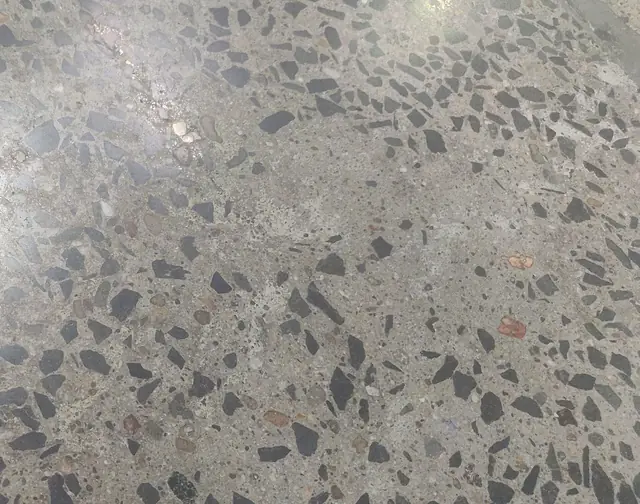

Edina slabs and what they bring
Edina's median home was built in 1971, and 16,395 of 24,071 housing units, about 68 percent, were built before 1980.[1] That means a lot of mature slabs, many with decades of salt, patched cracks and maybe old paint.
Homes built before 1978 raise one more issue. Minnesota's licensing statute says a licensee doing renovation under 40 CFR 745.83 on a residential structure built before 1978 must comply with lead-safe renovation requirements.[7] Grinding a slab is not the same as sanding painted trim. But ask the installer how they handle any painted surfaces and dust in an older house.
Scope of work: what a prep plan should say in writing
- Method: grinder type, dust collection, and final surface profile.
- Repairs: which cracks and joints, what material goes in each.
- Moisture: test method, locations and pass or fail limits.
- Cure: how long the new concrete has aged, if it is new.
- Cleanup: dust, debris and waste disposal.
Cold weather also matters. Epoxy should not be applied below 50 degrees F, and a cold slab cures slowly.[8] A good prep plan includes slab temperature.
Concrete sealing in Edina
Sealing means applying a clear protective layer that keeps water, salt and oil out of the pores. A national cost guide's figures put cleaning and sealing at $1 to $3 per square foot.[9] It costs far less than a coating, but it does less and has to be redone. The same guide notes that unsealed concrete quickly absorbs moisture, oils and grease, and that water freezing inside it causes more cracks.[9] A sealer does not add thickness, hide stains or fix a cracked slab, so it suits sound concrete only.
Generic sealers and why they fail
A cheap film-forming sealer is the usual failure. A concrete-products maker says acrylic-based cure-and-seal products are prone to abrasion from foot traffic, snow removal equipment and deicing materials.[10] It also says that when a sealed surface deteriorates, the cause is often the concrete mix, such as missing air entrainment, rather than the sealer.[10] That is a vendor view, but it explains why a sealer alone does not rescue a scaling slab.
Sealers come in two families. Penetrating sealers (silane and siloxane) soak in and react inside the pores without forming a film, and one manufacturer bulletin says they typically give 5 to 10 years of protection when properly applied.[10] Film-forming sealers sit on top. A national cost guide says acrylic sealers last 1 to 3 years on average, while epoxy or urethane sealers last 5 to 15 years.[9]
Edina sees about 51.2 inches of snow a year,[11] and cars carry salt into the garage. On concrete flatwork, the most common deicer damage has been surface scaling.[5] A sealer slows that damage, but it does not repair an old slab.
A national cost guide says the best time to seal is in spring or fall when temperatures stay between 50 and 80 degrees F for at least 24 hours, and the concrete must be dry.[9] New concrete needs patience too, since standard specifications recommend at least a 28-day cure before an epoxy or resinous coating.[4]
Sealing is the wrong answer when the slab is scaling, crumbling or flaking, or when cracks are active, because those need repair first. If you want color, a flake or a metallic finish, or a surface that resists hot tires and chemicals, a garage floor coating does that better. If a coating comes later, an old film sealer may need removing, so tell any installer what has been applied before.
Related pages
Prep also differs by surface: an outdoor slab is judged in the epoxy driveway coating page, a cleaned floor that only needs protection is covered in the sealing section above, and a glazed surface is covered under epoxy over a tile floor.
Once the slab is ready, you can choose a finish: garage floor coating, decorative epoxy flooring or a self leveling epoxy floor. For costs, see the pricing guide. Browse everything on the services overview or go back to the home page.
Sources
- U.S. Census Bureau (ACS 2024 5-year, via Census Reporter). American Community Survey 2020-2024 5-year estimates for Edina city, MN (served by Census Reporter API), accessed November 23, 2026
- Bob Vila. Epoxy Garage Floor Cost, April 26, 2024
- Sika. Sikafloor Quartzite Broadcast System product data sheet (Sept 2023, v01.04), accessed November 23, 2026
- Sherwin-Williams. How Soon Can You Epoxy Coat Freshly Poured Green Concrete?, accessed November 23, 2026
- Federal Highway Administration. Chemical Deicers and Concrete Pavement: Impacts and Mitigation (Tech Brief FHWA-HIF-17-008), 2018-03
- OSHA standard, text hosted by Cornell Legal Information Institute. 29 CFR 1926.1153 Respirable crystalline silica, accessed November 26, 2026
- Minnesota Office of the Revisor of Statutes. Minnesota Statutes 326B.805 Licensing requirements, accessed November 23, 2026
- ConcreteNetwork.com. What's the Best Concrete Garage Floor Coating? Epoxy, polyurea, or polyaspartic, accessed November 23, 2026
- HomeGuide. How Much Do Concrete Cleaning and Sealing Services Cost? (2026), November 21, 2025
- The Euclid Chemical Company. Technical Bulletin CP-31: Protecting Exterior Concrete for Winter Durability, accessed November 23, 2026
- Minnesota Department of Natural Resources State Climatology Office. Twin Cities normals: 1991-2020 compared to 1981-2010, May 6, 2021