Garage floor coating in Edina
Garage floor coating in Edina is a resin film bonded to a ground, cleaned concrete slab. A typical epoxy job takes about three days, according to a national home-improvement site (April 2024), is walkable after roughly 24 hours, and keeps cars off for about a week.[1][2] The coating is only as good as the slab prep.
Calls will be recorded.
Last updated
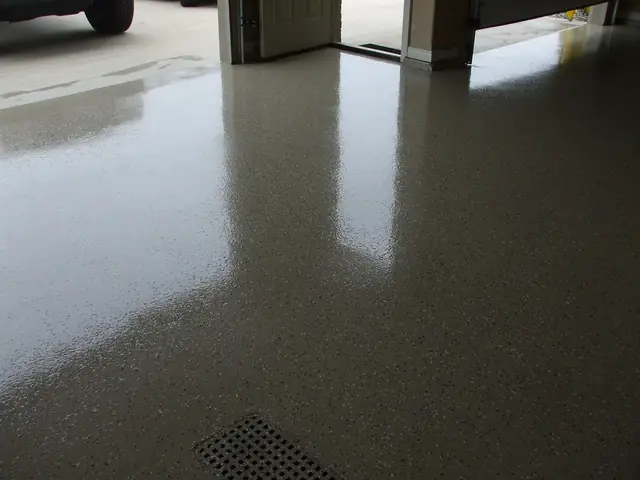
What a coating does for a concrete garage floor
A bare concrete garage floor is porous. Oil, tire residue, antifreeze and meltwater soak in, and the slab keeps dusting as the surface wears. A coating closes those pores with a continuous film that wipes clean and resists stains.
It also changes how the garage looks and feels. Painting a garage floor with a roller-grade product gives a quick color change. But a true epoxy or polyaspartic system is thicker, bonds harder and holds up under hot tires. If you are comparing the two, the difference is mostly film thickness and chemistry, not color.
Most Edina homes are older. The median home here dates to 1971, and 68% of the housing stock predates 1980.[3] That means many garage slabs are decades old, have seen salt and have small cracks. Those details drive the prep list more than the choice of product.
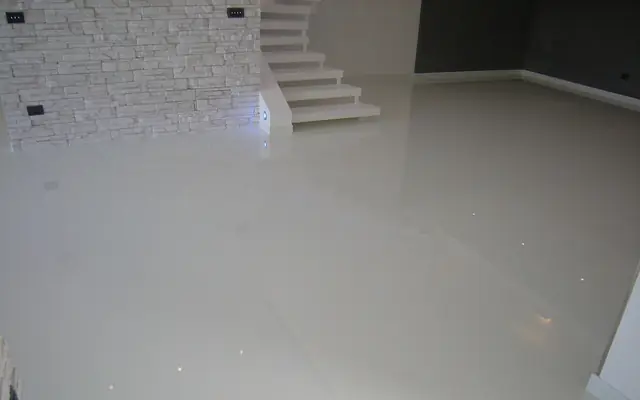

How an epoxy garage floor is installed
An epoxy garage floor follows the same order on almost every job. Knowing the order helps you check that nothing is skipped.
- Grind and clean. The installer opens the concrete surface with a diamond grinder and a dust-controlled vacuum. Acid etching from a bottle is a weaker substitute. The concrete preparation page covers this step in detail.
- Repair. Cracks, spalls and old control-joint damage are filled with a repair material before any color goes down.
- Prime and base coat. A resin and hardener are mixed and rolled or squeegeed onto the slab. An epoxy resin system is exactly that: a resin plus a curing agent combined to form the coating.[4]
- Broadcast or tint. Flakes or quartz can go into the wet base coat. See decorative epoxy flooring for that option.
- Topcoat. A clear sealer adds abrasion resistance and makes the surface easier to clean.
Prep takes about a day, coating a day and sealing a day. Labor can reach 65 percent of the price, so a very low price can mean a step was cut.[2]
Cold weather and the 50 F rule
A Minnesota garage is rarely heated. Epoxy should not be applied below 50 degrees F, and a colder slab slows curing.[1] The Twin Cities normal January temperature is 16.2 F, and the monthly normals stay below freezing from December through February and only just above it in March.[5]
That has two practical effects. First, many installers schedule epoxy work between late spring and early fall, or heat the space and the slab before and during the job. Second, ask how the slab temperature is measured, not just the air temperature. A slab can stay cold long after a warm afternoon.
If you need a floor done in a cold month, a fast-curing system may be an option. Read the page on polyaspartic garage floor coatings before deciding.
Road salt, snow and what lands on the slab
Road salt damage on a garage floor usually shows up as a flaky, pitted surface after a few winters, because chemical deicers make freeze-thaw damage to concrete worse.[6] The Twin Cities average 51.2 inches of snow a year,[5] and cars carry that melt, plus salt brine, into the garage. State road crews used 190,758 tons of salt in the 2025-26 winter, up from 141,489 tons the winter before.[7]
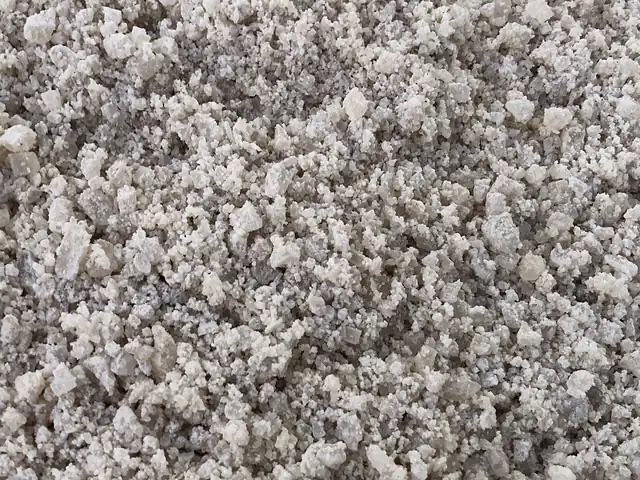

Salt does not dissolve concrete the way acid would. The trouble is physical: water soaks into the pores, freezes and expands, and a deicer changes how that cycle behaves. On flatwork such as slabs, the most common deicer damage has been surface scaling,[6] the loss of a thin layer of surface paste that leaves a rough, exposed-aggregate look. Freeze-thaw durability depends largely on entrained air bubbles,[6] and many Edina slabs were poured decades ago, since the median home here dates to 1971,[3] so you cannot assume modern air content. Calcium chloride and magnesium chloride brines can cause shadowing at joints that progresses to disintegration of the concrete.[6]
Walk the garage in good light and look for a rough, sandy surface, dark shadowing along the control joints and small pits that catch a broom bristle. A well-bonded coating keeps brine on top of the floor instead of in it, and it makes the floor much easier to rinse. It will not rescue a slab that is already flaking, so a scaling surface needs grinding and repair first. Grinding releases silica dust, with an OSHA limit of 50 micrograms per cubic meter as an 8-hour average,[8] so ask any installer how dust is controlled.
Cheap habits help with or without a coating. Rinse brine out in late winter, push standing meltwater toward the door, put a mat under the wheels and keep downspouts off the apron. The Minnesota Pollution Control Agency calls chloride a permanent pollutant,[9] so sweep up solid residue instead of washing heavy brine into the street.
Colors and finishes for a garage slab
A garage floor can be one solid color or a blend of chips. The usual additives are decorative flakes of mica or vinyl, quartz blends and metallic pigments.[10] A home-renovation magazine lists flakes at about $10 per one-pound bag.[10]
Sunlight shapes the choice. Epoxy can take on a yellowish color with sunlight and humidity, and a UV-resistant topcoat prevents that at added cost.[10] A bay with a south-facing door and windows needs that topcoat more than a windowless one. Plain light shades show tire marks and dirt quickly, while speckled blends hide them. The flake and quartz page compares chip sizes and coverage.
Common problems in Twin Cities garages
Many failed garage floors trace back to one of four causes:
- Salt scaling. A winter of brine leaves a rough, flaking top layer, the most common deicer damage on slabs.[6]
- A cold slab. Epoxy should not be applied below 50 degrees F, and cold slows the cure.[1]
- Trapped moisture. Water under the film lifts it, which is why a moisture test comes first.[11]
- Older concrete. The median Edina home dates to 1971,[3] and its slab may have little entrained air.[6]
Each one is cheaper to prevent in the prep stage than to fix after the coating peels.
What moves the price
Published prices vary widely because garages vary. A national home-improvement site (April 2024) puts epoxy at $3 to $12 per square foot installed, with a typical garage at $1,595 to $3,337.[2] A cost-estimating site (May 2026) starts its national average for epoxy-coating a garage floor at $7.78 to $12.71 per square foot.[12] These are national figures, not Edina prices.
What moves a price in a real garage:
- Square footage, from a one-car bay to a three-car garage.
- Condition of the slab: cracks, old paint, oil stains or prior coatings to remove.
- The system: solid color, flake, metallic, or a clear urethane topcoat.
- Moisture: a slab that tests wet needs a barrier first.
- Access and cleanup, such as moving shelves and disposing of material.
See the pricing guide for the full breakdown and ranges, and the regulations page for permit and licensing questions.
Questions to ask the installer
Good questions are plain ones. How will you prepare the slab, and with what machine? How is moisture tested?
What is the coating's film thickness and how many coats? When can I walk on it and when can the car return? What happens at the door threshold and the control joints?
Also ask for a written scope and a payment schedule with only a modest down payment. The state labor department treats full or substantial payment before work as a red flag.[13] If you are weighing a store kit against a hired installer, the kit versus professional answers lay out the tradeoffs.
Related options
A sheltered garage floor is a different job from an outdoor slab. So see outdoor epoxy floors for patios and porches if the sun and rain reach it. A salted slab outside the door is covered under epoxy driveway coating. If you only want to protect the concrete rather than coat it, read about sealing a concrete garage floor.
If the garage is part of a finished space, a metallic epoxy floor gives a dramatic, showroom look. If the slab has dampness or radon concerns, the basement floor coating page explains how those issues change the plan. Everything the site covers is listed on the services overview, and the contact page explains what happens to a call or request.
Sources
- ConcreteNetwork.com. What's the Best Concrete Garage Floor Coating? Epoxy, polyurea, or polyaspartic, accessed November 23, 2026
- Bob Vila. Epoxy Garage Floor Cost, April 26, 2024
- U.S. Census Bureau (ACS 2024 5-year, via Census Reporter). American Community Survey 2020-2024 5-year estimates for Edina city, MN (served by Census Reporter API), accessed November 23, 2026
- California Department of Public Health. Epoxy Resin Systems fact sheet (HESIS), 1989-06
- Minnesota Department of Natural Resources State Climatology Office. Twin Cities normals: 1991-2020 compared to 1981-2010, May 6, 2021
- Federal Highway Administration. Chemical Deicers and Concrete Pavement: Impacts and Mitigation (Tech Brief FHWA-HIF-17-008), 2018-03
- Minnesota Department of Transportation. Winter Maintenance Report, accessed November 23, 2026
- OSHA standard, text hosted by Cornell Legal Information Institute. 29 CFR 1926.1153 Respirable crystalline silica, accessed November 26, 2026
- Minnesota Pollution Control Agency. State salt purchase report and reduction goal (Report to the Legislature, February 2025), 2025-02
- This Old House. How Much Does Epoxy Flooring Cost?, March 13, 2026
- Synchrony. How Much Does Epoxy Flooring Cost?, April 20, 2026
- Homewyse. Cost to Epoxy Coat Garage Floor, 2026-05
- Minnesota Department of Labor and Industry. A consumer's guide to Hiring a Residential Building Contractor, accessed November 23, 2026