Decorative epoxy flooring in Edina
Decorative epoxy flooring usually means a flake or chip system: colored chips thrown into a wet epoxy base coat, then locked under a clear topcoat. The chips come in mica or vinyl, and the speckled texture hides small flaws in the slab.[1] A March 2026 guide says solid epoxy floors can last up to 20 years.[1]
Calls will be recorded.
Last updated
It is a familiar look for a finished garage.
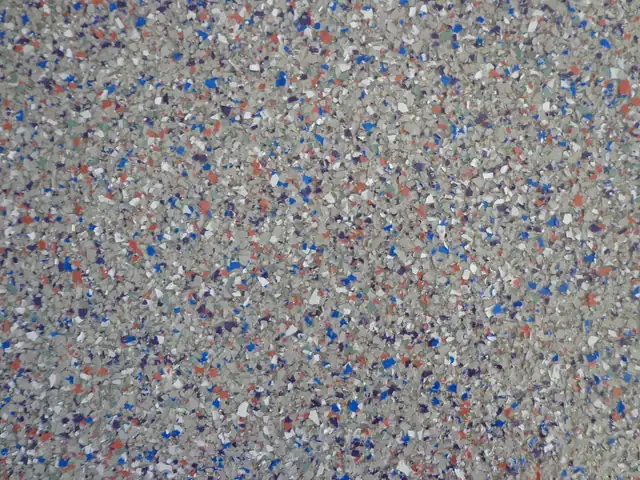
How a flake system is built
A flake floor is built in layers, and each layer has a job.
- Primed, prepared slab. The concrete is ground and repaired first. Chips will not cover bad prep. The concrete preparation page explains why.
- Tinted base coat. A mixed resin and hardener is rolled out in a color that sits behind the chips.[2]
- Broadcast. The installer throws chips by hand into the wet coat, either lightly for a speckled look or to full coverage so no base color shows.
- Scrape and sweep. Once cured, loose chips are scraped and vacuumed off.
- Clear topcoat. One or two clear coats bury the chip edges so the surface is smooth enough to clean.
Because the chips make a textured, rough layer, the topcoat does real work. A thin topcoat leaves edges you can feel. A fuller one is smoother and shows less wear at the door and where tires turn.


Why chips hide so much
Decorative epoxy flooring earns its popularity on a practical point: busy patterns forgive. A pinhole, a hairline patch or a tire shadow disappears in a random mix of colors. A solid gray coat shows every one of those.
Edina has a lot of older garages to hide. About 68 percent of the city's housing units were built before 1980, so slabs often carry patched cracks and past stains.[3] A flake blend is a reasonable choice when the repairs are sound but not invisible. It is not a cure for a slab that is still moving or flaking.
Choosing chip size, blend and coverage
Three decisions shape the look, and each also changes the work.
- Chip size. Small chips give a fine, granite-like texture. Large chips look bolder, but they leave more edge to bury under the topcoat.
- Blend. Many installers offer a ready mix of three to five colors. A darker blend hides dirt best. A pale blend shows grime but brightens a dim garage.
- Coverage. Light broadcast shows the base color between chips. Full broadcast, sometimes called a flood, covers the base entirely and gives the most uniform surface.
Decorative flakes sell at about $10 per 1-pound bag, according to a home-renovation magazine (March 2026).[1] That is a materials figure, and the amount needed rises quickly with coverage. Ask how many pounds the installer plans to use for your square footage.
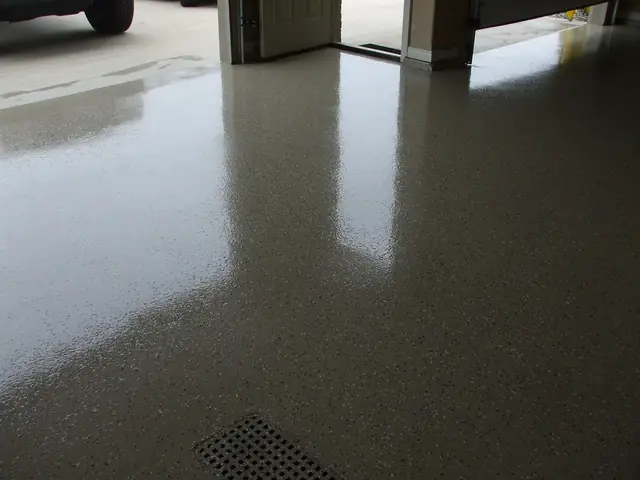
Durability and how long it lasts
A solid epoxy floor can last up to 20 years in the best case. Meanwhile, thin water-based coats may need redoing every one to three years.[1] A flake floor with a proper clear topcoat may last toward the longer end, since the topcoat takes much of the wear. The source does not rate flake floors separately, so ask about the actual system.
Topcoats are priced separately from the base. A consumer lender's cost guide (April 2026) lists a urethane topcoat at $2 to $5 per square foot as an optional add-on.[4] In a Minnesota garage, a urethane topcoat is worth asking about, since road salt and sliding boots are tough on any clear film. MnDOT used 190,758 tons of salt in winter 2025-26 after 141,489 tons the winter before, so the salt load changes from year to year.[5]
Weighing chip colors and topcoat options? Leave a voicemail or send the form.
Calls will be recorded.
Cure times and cold garages
Plan on a walkable surface after about 24 hours, with vehicles kept off for about a week while the floor cures.[6] Epoxy should not go down below 50 degrees F, and an unheated Edina garage in winter is likely to be colder than that.[6] Chips do not change this limit. The same slab-first thinking applies to a finished basement, where the Minnesota Department of Health recommends that every Minnesota home be tested for radon.[7] If the job must happen in cold weather, ask about heat or a different system, such as a polyaspartic one-day coating.
Flake versus other looks
Flake is the practical middle. It usually costs less than a full metallic and hides more than a plain solid color. If you want depth, swirl and shine, look at a metallic epoxy floor. If you want the plainest option for a work area, a solid color on a garage floor coating job may be enough.
Quartz epoxy floors in Edina
A quartz epoxy floor is a thick, seamless system made by broadcasting colored quartz sand into wet epoxy, then sealing it. One manufacturer describes its version as 3 mm (1/8 inch) thick.[8] The surface is textured rather than glass-smooth, which makes quartz the step up from chips when you want more grip and wear resistance.
Natural quartz grains, dyed or blended in several colors, are thrown into a wet resin layer. Once the resin sets, the loose grains are swept away and the rest is locked under clear coats. A second resin layer and broadcast build thickness, and the topcoats set the sheen and the grip.
Quartz systems set slab requirements. One manufacturer's data sheet asks for a mechanically prepared surface at a profile equivalent to ICRI CSP 3-4 and concrete with at least 25 MPa (3,625 psi) compressive strength at 28 days.[8] The same sheet requires moisture content under 4 percent by weight.[8] About 68 percent of Edina's housing units were built before 1980,[3] so ask whether the installer will test strength and moisture rather than assume.
Cold is the enemy of any resin job. That data sheet says mixing and applying at temperatures below 18 degrees C (65 degrees F) reduces workability and slows cure,[8] which points an unheated Minnesota garage toward a warm-season job or temporary heat.
The manufacturer says the surface texture can be varied to make a range of slip-resistant, improved-traction finishes.[8] The tradeoff is that a rougher surface holds dirt and is harder to mop than glass-smooth epoxy, so pick the texture for the room. The anti-slip coating section shows how grip is measured.
No source lists a quartz-only price for Minnesota. A national cost guide's table lists epoxy at $4 to $10 per square foot,[9] so treat any quartz figure as something to confirm in writing. Ask for the total thickness, the number of broadcasts and topcoats, and the strength and moisture tests planned for your slab.
What to ask before you hire
- How many chips per square foot, and what is the planned coverage?
- How many clear coats, and what chemistry is the topcoat?
- How are the chips and base tested for slip on wet boots?
- What happens at control joints, where the floor can crack again?
If you want a thicker, harder-wearing speckle, the quartz section above is the next step up, and epoxy stairs and steps can borrow the same chip-and-grit approach for grip.
For price ranges, read the pricing guide. For the rest of the services, see the full list of coatings, or start at the home page.
Sources
- This Old House. How Much Does Epoxy Flooring Cost?, March 13, 2026
- California Department of Public Health. Epoxy Resin Systems fact sheet (HESIS), 1989-06
- U.S. Census Bureau (ACS 2024 5-year, via Census Reporter). American Community Survey 2020-2024 5-year estimates for Edina city, MN (served by Census Reporter API), accessed November 23, 2026
- Synchrony. How Much Does Epoxy Flooring Cost?, April 20, 2026
- Minnesota Department of Transportation. Winter Maintenance Report, accessed November 23, 2026
- ConcreteNetwork.com. What's the Best Concrete Garage Floor Coating? Epoxy, polyurea, or polyaspartic, accessed November 23, 2026
- Minnesota Department of Health. Radon in Homes, accessed November 23, 2026
- Sika. Sikafloor Quartzite Broadcast System product data sheet (Sept 2023, v01.04), accessed November 23, 2026
- HomeGuide. How Much Does Concrete Coating Cost? (2026), November 25, 2024